

Outdoor tiles designed for residential exterior spaces function as a performance-led surface system that ensures durability, safety, climate resilience, and long-term usability under constant exposure to sun, heat, moisture, and foot traffic. Outdoor tiles design addresses structural load, slip resistance, drainage efficiency, UV stability, heat management, and maintenance behaviour across patios, terraces, balconies, pathways, pool surrounds, and garden areas. Material selection prioritises dense, low-porosity porcelain and vitrified tiles with water absorption below 0.5% to prevent moisture ingress and surface degradation. Tile thickness and size selection support load resistance, thermal stability, and accurate drainage geometry. Surface finishes focus on textured, matt, and anti-slip profiles to maintain traction in wet conditions and high temperatures.
Colour systems manage heat absorption and visual comfort, particularly in hot climates such as the UAE. Layout patterns guide functional movement, support runoff, and reduce stress concentration at edges and joints. Grout and joint design accommodate thermal expansion and moisture exposure while protecting substrates. Integrated outdoor tiles design aligns material, thickness, size, finish, colour, layout, joints, drainage, and slip rating as one coordinated system, delivering safe, low-maintenance, sustainable, and visually refined exterior living spaces suitable for modern and luxury residential environments.
What Is Outdoor Tiles Design?
Outdoor tiles design defines the performance-led selection of tile material, thickness, surface finish, size, colour system, layout geometry, and safety specification used to withstand weather exposure, heat, moisture, and foot traffic in external residential areas. Outdoor tiles design prioritises durability, slip safety, UV stability, drainage efficiency, and low maintenance in open-air environments.
Functional Purpose
Outdoor tiles design focuses on protecting external surfaces from sun exposure, rain, temperature fluctuation, and mechanical wear. Correct specification prevents surface degradation. Stable materials protect substrates. Functional accuracy supports long-term outdoor usability.
Material Selection
Dense, low-porosity materials perform best in outdoor environments exposed to heat and moisture. Porcelain outdoor tiles absorb below 0.5% water. High-density bodies resist cracking and staining. Material choice determines lifespan in exterior settings.
Surface Finish
Outdoor tile finishes must prioritise traction and weather resistance over reflectivity. Matt and textured finishes improve grip under wet conditions. Anti-slip surfaces reduce fall risk. Finish selection directly affects safety.
Tile Thickness
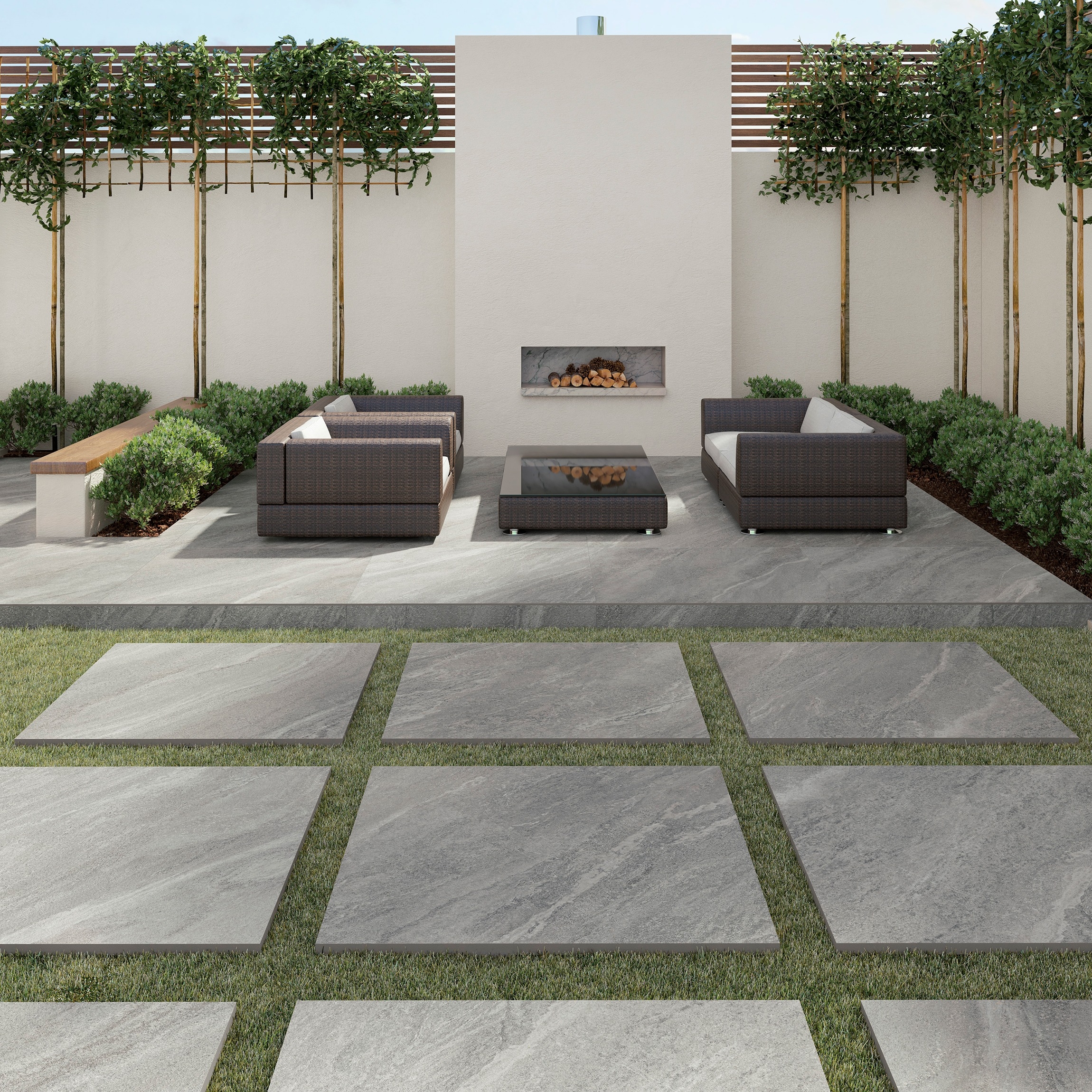
Structural reliability increases when outdoor tiles maintain sufficient thickness for load and impact resistance. Thicker tiles tolerate foot traffic and furniture weight. Increased mass improves thermal stability. Correct thickness prevents breakage.
Colour Stability
Visual performance improves when outdoor tiles resist UV fading and heat absorption. UV-stable pigments preserve colour consistency. Lighter tones reduce surface heat gain. Colour selection affects comfort and appearance.
Layout Strategy
Drainage and movement safety improve when outdoor tile layouts support water runoff and directional flow. Correct slope alignment prevents pooling. Straight layouts maintain stability. Layout discipline protects surface integrity.
Grout And Joints
Outdoor performance improves when joints accommodate expansion and moisture exposure. Weather-resistant grout limits cracking. Correct joint width absorbs movement. Joint design supports durability.
Safety Performance
Slip resistance becomes critical in outdoor tiles design due to rain and surface moisture. R11-rated surfaces improve traction. Textured profiles enhance grip. Safety specification protects daily use.
Maintenance Efficiency
Low-maintenance outdoor tiles design reduces cleaning effort and surface treatment requirements. Non-porous surfaces resist staining. Stable finishes tolerate outdoor cleaning. Maintenance efficiency supports long-term usability.
What Is Outdoor Tiles Design For Exterior Spaces?
Outdoor tiles design for exterior spaces defines the engineered selection of tile material, thickness, surface finish, size, colour system, layout geometry, joint specification, and slip-safety performance used to deliver durability, drainage control, heat resistance, and safe movement in exposed environments. Outdoor tiles design addresses UV exposure, rainfall, temperature fluctuation, and load stress across patios, terraces, balconies, pathways, and pool surrounds.
Environmental Function
Exterior surface performance improves when tile systems withstand sun exposure, moisture ingress, and thermal variation without degradation. Dense bodies resist cracking. Stable finishes prevent surface breakdown. Functional accuracy supports long-term outdoor use.
Material Choice
Low-porosity, high-density materials perform best in exterior applications. Porcelain tiles absorb below 0.5% water. Dense compositions resist staining and freeze–thaw stress. Material selection defines exterior lifespan.
Thickness Control
Structural reliability increases when outdoor tiles maintain adequate thickness for impact and load resistance. Thicker profiles tolerate foot traffic and outdoor furniture. Increased mass improves thermal stability under heat.
Surface Finish
Slip-safe finishes remain essential for exterior safety under wet conditions. Matt and textured finishes improve traction. Anti-slip profiles reduce fall risk during rain and cleaning.
Colour Performance
Visual comfort improves when colour systems manage heat gain and UV exposure. UV-stable pigments preserve colour consistency. Lighter tones reduce surface temperature. Colour choice affects comfort and longevity.
Layout Geometry
Drainage efficiency improves when layouts support water runoff and directional flow. Correct slope alignment prevents pooling. Straight and aligned layouts maintain surface stability.
Joint Specification
Movement tolerance improves when joints accommodate expansion and moisture exposure. Weather-resistant grout limits cracking. Correct joint width absorbs thermal movement.
Safety Requirements
Outdoor safety increases when slip resistance ratings meet exterior wet-area thresholds. R11-rated surfaces provide higher traction. Textured profiles enhance grip in exposed zones.
Maintenance Behaviour
Exterior upkeep reduces when tile systems resist staining and surface erosion. Non-porous tiles simplify cleaning. Stable finishes tolerate outdoor maintenance routines.
Why Outdoor Tiles Design Is Important For Exposed Environments?
Outdoor tiles design is important for exposed environments because exterior surface performance must withstand UV radiation, heat load, rainfall, moisture ingress, thermal expansion, and continuous foot traffic without compromising safety, durability, or appearance. Incorrect tile specification accelerates surface failure. Correct outdoor tiles design protects substrates, controls slip risk, and ensures long-term usability in open-air conditions.
Weather Resistance
Exterior durability improves when tile systems resist sun exposure, rain, and temperature fluctuation. Dense, low-porosity tiles prevent water absorption. UV-stable finishes avoid surface breakdown. Weather resistance preserves structural integrity.
Heat Management
User comfort increases when outdoor tiles manage heat gain effectively. Light-coloured tiles reduce surface temperature under direct sunlight. Dense materials stabilise thermal behaviour. Heat control supports barefoot and recreational use in hot climates.
Moisture Control
Surface reliability improves when outdoor tiles prevent water ingress and surface pooling. Low absorption rates block moisture penetration. Correct layout supports runoff. Moisture control protects adhesives and substrates.
Slip Safety
Accident risk reduces when outdoor tiles provide sufficient traction in wet conditions. Textured and anti-slip finishes improve grip. R11-rated surfaces support exposed walkways, terraces, and pool surrounds. Safety specification remains critical.
Structural Durability
Surface lifespan extends when outdoor tiles withstand impact, load, and movement stress. Adequate thickness resists cracking. Strong bodies tolerate furniture weight and foot traffic. Structural durability reduces repair frequency.
Drainage Accuracy
Functional performance improves when tile layouts support efficient water evacuation. Correct slope alignment prevents standing water. Drainage-aware design avoids algae growth and slip hazards.
UV Stability
Visual consistency improves when outdoor tiles resist colour fading and surface degradation. UV-resistant pigments preserve appearance. Stable colours support long-term exterior aesthetics.
Maintenance Efficiency
Upkeep effort decreases when outdoor tiles resist staining and environmental residue. Non-porous surfaces block dirt penetration. Easy cleaning supports practical exterior maintenance.
Safety Consistency
Exterior usability improves when tile performance remains predictable across changing weather conditions. Stable traction and surface behaviour protect daily movement. Consistent performance builds trust in exterior spaces.
How Does Outdoor Tiles Design Handle Heat, Sunlight, And Temperature Variation?
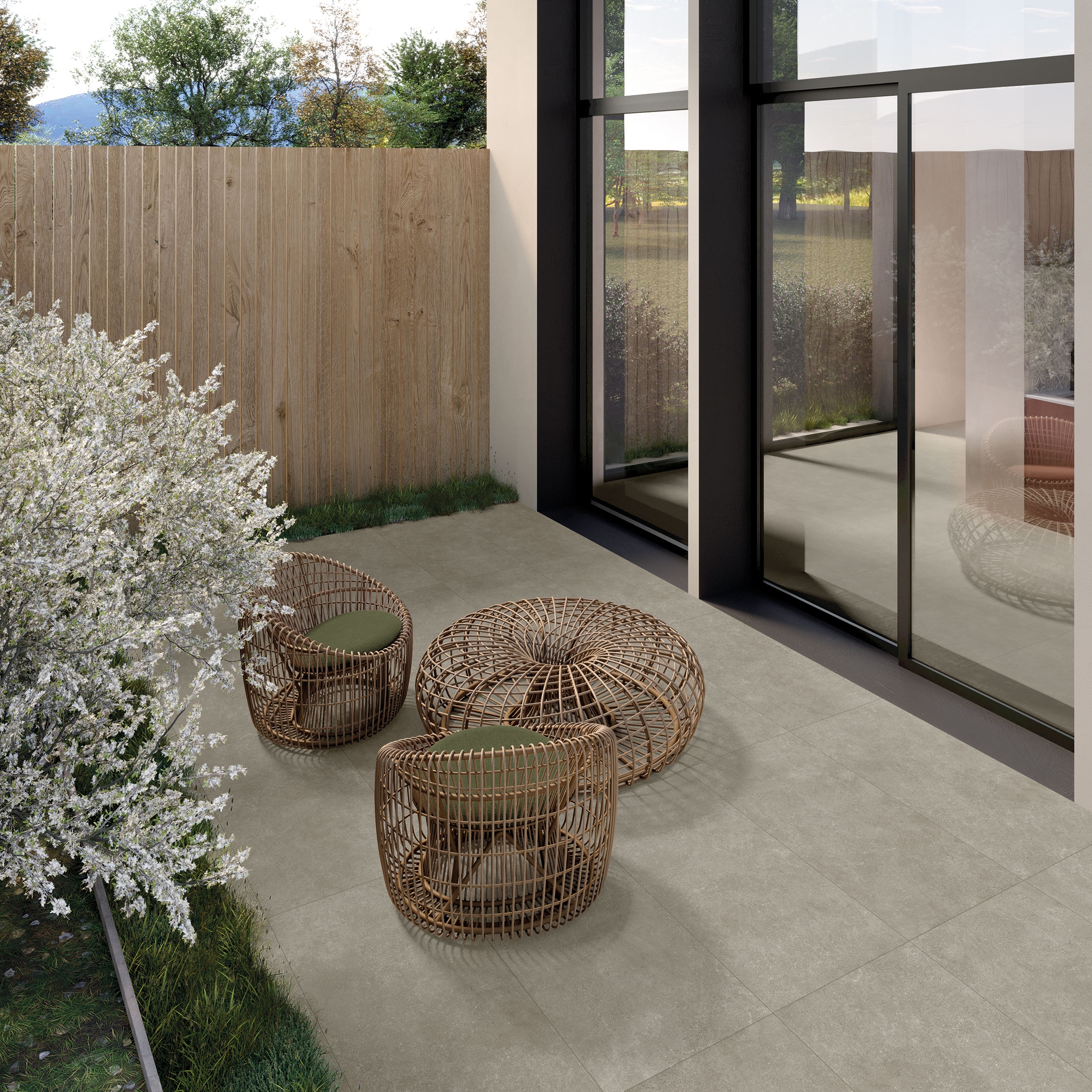
Outdoor tiles design handles heat, sunlight, and temperature variation by using dense low-porosity materials, UV-stable colour systems, adequate tile thickness, textured finishes, and movement-tolerant joint design to maintain structural stability, surface safety, and visual consistency in exposed environments. Performance depends on thermal behaviour rather than appearance alone.
Heat Resistance
Surface stability improves when outdoor tiles tolerate prolonged heat exposure without warping or surface degradation. Dense porcelain bodies resist thermal stress. High firing temperatures increase structural integrity. Heat resistance prevents cracking under direct sun.
Sunlight Exposure
Visual performance improves when outdoor tiles resist ultraviolet radiation. UV-stable pigments prevent colour fading. Stable finishes avoid surface chalking. Consistent appearance supports long-term exterior aesthetics.
Surface Temperature Control
User comfort improves when tile colours manage heat absorption effectively. Light and mid-tone colours reflect solar radiation. Lower heat retention reduces surface temperature. Reduced heat gain supports barefoot use in hot climates.
Thermal Expansion Management
Crack prevention improves when tile systems accommodate expansion and contraction. Correct joint width absorbs movement. Flexible outdoor-grade grout limits stress transfer. Expansion tolerance protects tile edges.
Tile Thickness
Structural reliability improves when outdoor tiles maintain sufficient thickness for thermal stability. Thicker tiles distribute heat evenly. Increased mass reduces rapid temperature fluctuation. Thermal stability extends service life.
Finish Behaviour
Surface safety improves when finishes remain stable under heat and sunlight. Textured and matt finishes retain traction when hot. Polished finishes lose grip and heat faster. Finish selection supports safety and durability.
Substrate Protection
System durability improves when tile design limits heat transfer to underlying layers. Low-absorption tiles protect adhesives. Stable substrates resist thermal fatigue. Protection prevents delamination over time.
Day–Night Temperature Shift
Performance stability improves when tiles tolerate rapid temperature changes between day and night. Dense porcelain resists micro-cracking. Correct installation prevents stress accumulation. Stability supports desert and coastal climates.
Maintenance Interaction
Surface performance remains consistent when heat exposure does not accelerate wear. UV-resistant finishes tolerate cleaning. No surface breakdown occurs. Maintenance effort remains predictable.
How Does Outdoor Tiles Design Manage Water Drainage And Moisture Exposure?
Outdoor tiles design manages water drainage and moisture exposure by combining low-porosity materials, slip-safe textured finishes, slope-aware layouts, moisture-tolerant joints, and expansion control to prevent pooling, seepage, and surface degradation in exposed exterior areas. Effective drainage protects substrates, reduces slip risk, and preserves long-term performance.
Low Porosity
Moisture resistance improves when tile bodies block water absorption at the material level. Porcelain outdoor tiles absorb below 0.5% water. Dense bodies prevent capillary ingress. Limited absorption protects adhesives and base layers.
Surface Texture
Drainage safety improves when textured finishes break surface water films. Micro-textured and structured profiles disperse water. Reduced hydroplaning increases traction. Textured surfaces support wet-condition stability.
Slope Planning
Water evacuation improves when layouts follow correct fall geometry. Gradients direct runoff toward drains. Consistent slopes prevent standing water. Accurate falls reduce algae growth and slip hazards.
Tile Size Strategy
Drainage accuracy improves when tile sizes suit exterior slopes. Medium formats balance continuity and runoff. Smaller formats support precise falls around drains. Size selection prevents puddling at joints.
Joint Design
Moisture control strengthens when joints accommodate water and movement. Outdoor-grade grout resists washout. Correct joint width absorbs thermal movement. Durable joints limit seepage pathways.
Edge And Perimeter Control
Ingress prevention improves when edges and perimeters manage runoff correctly. Drip edges and trims guide water away from substrates. Finished edges prevent backflow beneath tiles. Perimeter detailing protects assemblies.
Substrate Preparation
System durability improves when substrates support drainage beneath the surface. Drainage layers prevent trapped moisture. Proper waterproofing shields structural elements. Prepared bases extend service life.
Rainfall Response
Performance stability improves when surfaces shed water efficiently during heavy rain. Textured finishes maintain grip. Rapid runoff prevents pooling. Stable behaviour supports safe exterior use.
Cleaning Interaction
Moisture management remains effective when surfaces tolerate wash-down cleaning. Non-porous tiles resist saturation. Joints retain integrity after cleaning. Predictable drying supports maintenance routines.
What Types Of Outdoor Tiles Design Are Used In Homes?
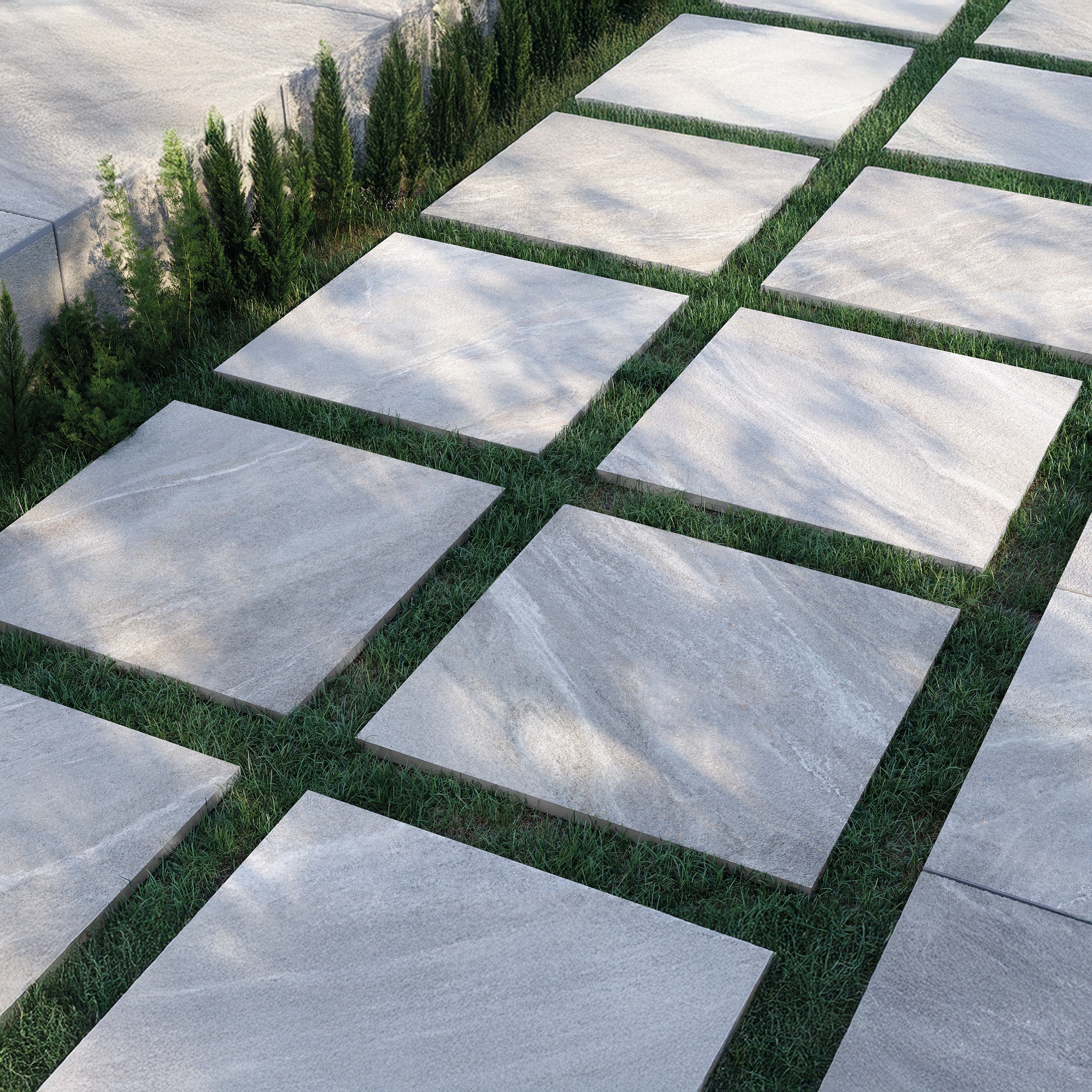
Outdoor tiles design used in homes follows defined categories based on material performance, surface finish, tile format, and layout strategy to ensure slip safety, weather resistance, heat control, drainage efficiency, and long-term durability in exposed residential areas. Each design type aligns with exterior use conditions such as patios, balconies, terraces, pathways, gardens, and pool surrounds.
Material-Based
Material-based outdoor tiles design prioritises dense, low-porosity compositions for exterior durability. Porcelain outdoor tiles dominate due to water absorption below 0.5%. Vitrified tiles support high-load areas. Natural stone appears in controlled zones with sealing. Material selection defines lifespan and weather resistance.
Finish-Based
Finish-based outdoor tiles design focuses on traction and surface stability under wet conditions. Matt, textured, and anti-slip finishes improve grip. Polished finishes remain unsuitable outdoors. Finish choice directly affects safety and usability.
Large-Format
Large-format outdoor tiles design creates visual continuity and reduced joint exposure in open exterior spaces. Sizes above 600×600 mm minimise grout lines by approximately 30–35%. Fewer joints simplify maintenance. Large formats suit terraces and patios with correct drainage.
Modular
Modular outdoor tiles design uses coordinated sizes to balance drainage accuracy and visual rhythm. Repeating size sets improves slope control. Structured repetition maintains order. Modular layouts suit courtyards and seating zones.
Stone-Effect
Stone-effect outdoor tiles design delivers natural aesthetics with engineered exterior performance. Porcelain stone-effect tiles replicate limestone, slate, and travertine visuals. Dense bodies resist moisture and UV exposure. Stone-effect designs suit luxury exteriors.
Concrete-Effect
Concrete-effect outdoor tiles design supports modern exterior aesthetics with thermal stability. Neutral tones manage heat gain. Textured finishes improve grip. Concrete-effect tiles suit contemporary patios and walkways.
Wood-Effect
Wood-effect outdoor tiles design combines warm visuals with moisture-safe performance. Porcelain wood-effect tiles resist rot and fading. Slip-safe textures support wet conditions. Wood-effect designs suit balconies and poolside areas.
Paver-Style
Paver-style outdoor tiles design provides elevated load resistance and drainage capability. Thicker profiles support furniture weight. Raised installation systems allow water runoff beneath tiles. Paver formats suit roof terraces and raised decks.
Poolside
Poolside outdoor tiles design prioritises high slip resistance and rapid water shedding. R11-rated surfaces reduce fall risk. Textured profiles disperse surface water. Poolside designs ensure barefoot safety.
Layout-Based
Layout-based outdoor tiles design uses geometry to support drainage and movement flow. Straight-lay patterns maintain stability. Directional layouts guide runoff. Disciplined layouts protect surface integrity.
What Tile Materials Perform Best For Outdoor Applications?
Tile materials that perform best for outdoor applications combine very low water absorption, high density, UV stability, slip-safe finish compatibility, and resistance to heat, moisture, and mechanical load in exposed environments. Correct material selection protects exterior surfaces from cracking, fading, staining, and premature failure under weather stress.
Porcelain
Porcelain tiles deliver the highest overall performance for outdoor use due to very low porosity and high structural density. Water absorption remains below 0.5%. Dense bodies resist moisture ingress, heat stress, and surface staining. Porcelain supports patios, terraces, balconies, walkways, and pool surrounds.
Vitrified
Vitrified tiles provide superior durability for high-traffic outdoor areas exposed to heat and moisture. Glass-like density reduces porosity to approximately 0.1%. Surface hardness resists abrasion and furniture load. Vitrified tiles suit courtyards and circulation paths.
Outdoor Pavers (Porcelain)
Porcelain paver tiles perform effectively in exterior spaces requiring increased thickness and load resistance. Thicker profiles tolerate furniture weight and point loads. Raised installation systems improve drainage beneath surfaces. Paver formats suit roof terraces and elevated decks.
Stone-Effect Porcelain
Stone-effect porcelain combines natural aesthetics with engineered outdoor performance. Dense porcelain bodies eliminate sealing requirements. Printed surfaces resist UV fading and moisture damage. Stone-effect porcelain suits luxury outdoor settings without maintenance risk.
Concrete-Effect Porcelain
Concrete-effect porcelain supports modern exterior design with thermal and structural stability. Neutral tones manage heat gain. Textured finishes improve traction. Concrete-effect tiles suit contemporary patios and pathways.
Wood-Effect Porcelain
Wood-effect porcelain delivers warm visual character with outdoor-safe performance. Porcelain composition prevents rot, swelling, and fading. Slip-safe textures support wet conditions. Wood-effect tiles suit balconies and poolside zones.
Natural Stone
Natural stone presents performance limitations outdoors due to higher porosity and maintenance requirements. Limestone and sandstone absorb moisture readily. Sealing reduces absorption but increases upkeep. Natural stone suits controlled exterior zones only.
Ceramic
Ceramic tiles perform poorly in outdoor applications due to higher water absorption. Absorption above 3% increases cracking risk under moisture and temperature variation. Ceramic tiles remain unsuitable for exposed exterior surfaces.
Cement-Based Tiles
Cement tiles require extensive sealing and maintenance in outdoor environments. High porosity increases staining and moisture damage. Frequent resealing becomes necessary. Cement tiles suit decorative covered exteriors only.
What Outdoor Tile Thickness Levels Support Structural Durability?
Outdoor tile thickness supports structural durability when thickness levels match load demand, installation method, and exposure severity to resist impact, thermal stress, and long-term wear in exterior environments. Thicker profiles distribute loads, stabilise thermal behaviour, and reduce breakage under traffic and furniture weight.
Standard Thickness
Standard outdoor durability is achieved with tiles measuring 9–10 mm for bonded exterior installations. This range supports residential foot traffic. Dense porcelain at this thickness resists cracking. Proper substrates and adhesives remain essential for longevity.
Reinforced Thickness
Higher durability performance occurs with 12–14 mm tiles in exposed or higher-traffic areas. Increased mass improves impact resistance. Thermal stability increases under direct sunlight. Reinforced thickness suits terraces, balconies, and circulation paths.
Paver Thickness
Maximum structural durability is delivered by 18–20 mm porcelain pavers for unbonded or raised systems. Thick profiles تحمل furniture loads and point stresses. Raised installations allow drainage beneath tiles. Paver thickness suits roof terraces, decks, and pool surrounds.
Load Distribution
Structural integrity improves when thickness aligns with expected loads and support spacing. Thicker tiles span minor substrate irregularities. Reduced flexing protects edges. Correct load matching prevents fracture.
Thermal Stability
Resistance to temperature variation increases with greater tile thickness. Increased mass moderates heat absorption and release. Reduced thermal shock limits micro-cracking. Stability supports hot daytime and cooler night cycles.
Installation Method
Durability depends on thickness matching the installation system. Bonded systems perform best at 9–14 mm. Raised pedestal systems require 18–20 mm. Correct pairing prevents failure.
Edge Strength
Chipping resistance improves as thickness increases. Thicker edges withstand knocks and furniture movement. Reduced edge damage preserves appearance.
Drainage Interaction
Water management improves when thicker tiles integrate with drainage-aware systems. Pavers elevate surfaces for runoff. Thicker bonded tiles tolerate slope geometry. Moisture control supports durability.
Material Density
Thickness effectiveness increases when combined with high-density porcelain bodies. Dense compositions enhance strength at each thickness level. Low-density materials underperform regardless of thickness.
What Tile Sizes Are Commonly Used In Outdoor Tiles Design?
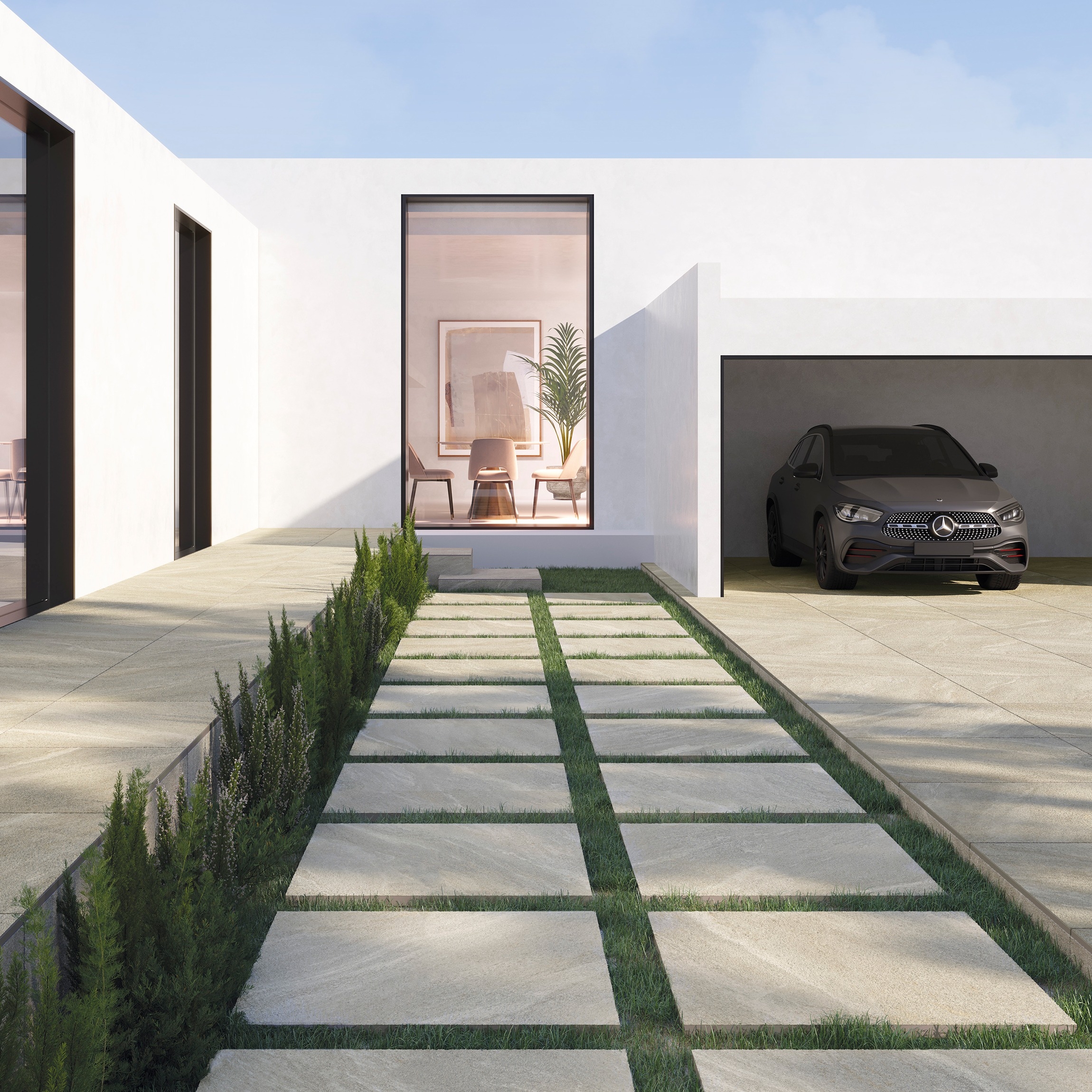
Outdoor tile sizes commonly used in exterior design balance drainage control, slip safety, structural stability, and visual continuity to perform under sun exposure, rainfall, and foot traffic. Size selection aligns with slope requirements, load demand, and open-space proportions.
Medium Formats
Medium outdoor tile sizes provide reliable drainage control and stable footing for most residential exteriors. Sizes such as 400×400 mm and 450×450 mm support accurate falls toward drains. Controlled proportions suit patios, balconies, and walkways.
Large Formats
Large outdoor tile sizes create visual continuity in open exterior areas when drainage planning remains precise. Sizes such as 600×600 mm and 600×1200 mm reduce joint density by approximately 30–35%. Large formats suit terraces and seating areas with engineered slopes.
Paver Sizes
Thick paver sizes support elevated load and flexible installation systems. Common sizes include 600×600 mm and 600×900 mm at 18–20 mm thickness. Paver formats suit roof terraces, decks, and raised pedestal systems.
Rectangular Formats
Rectangular outdoor tiles improve directional flow and spatial definition. Sizes such as 300×600 mm and 400×800 mm guide movement along pathways. Directional placement supports runoff alignment.
Small Formats
Small outdoor tile sizes improve drainage precision in wet or sloped zones. Sizes below 300×300 mm support complex falls around drains and steps. Higher joint frequency increases traction in exposed areas.
Poolside Sizes
Poolside environments perform best with smaller or textured formats for barefoot safety. Sizes such as 200×200 mm and mosaic formats improve grip and water dispersion. Smaller units reduce slip risk.
Grout Ratio Control
Outdoor performance improves when tile size maintains a balanced grout-to-tile ratio. Excessively large tiles increase pooling risk. Excessively small tiles raise maintenance effort. Balanced sizing supports safety and durability.
Size Coordination
Visual order strengthens when outdoor tile sizes follow a clear hierarchy across zones. Larger sizes anchor open spaces. Medium sizes support circulation. Smaller sizes manage transitions and slopes.
Climate Consideration
Tile size effectiveness depends on climate exposure and installation method. Hot climates benefit from sizes that manage expansion and drainage efficiently. Correct sizing prevents thermal stress.
How Do Tile Colours Affect Heat Absorption In Outdoor Spaces?
Tile colours affect heat absorption in outdoor spaces by controlling solar reflectance, surface temperature, thermal comfort, and heat retention under direct sunlight exposure. Colour choice determines how much solar energy tiles absorb or reflect. Correct colour selection reduces surface overheating and improves barefoot comfort in hot climates such as the UAE.
Light Colours
Surface temperature remains lower when light-coloured outdoor tiles reflect a higher percentage of solar radiation. White, beige, grey, and sand tones reflect more sunlight. Higher reflectance reduces heat buildup. Cooler surfaces improve walking comfort and usability during peak sun hours.
Dark Colours
Heat absorption increases when dark-coloured outdoor tiles absorb more solar energy. Charcoal, black, and deep brown tones retain heat. Surface temperature rises significantly under direct sun. Dark colours reduce barefoot comfort and increase heat stress in exposed areas.
Mid-Tone Colours
Thermal balance improves when mid-tone outdoor tile colours moderate absorption and reflectance. Stone grey, taupe, and warm neutral shades absorb less heat than dark colours while avoiding glare. Balanced tones support visual warmth with manageable surface temperature.
Colour Reflectance Index
Outdoor comfort improves when tile colours present higher solar reflectance values. High-reflectance colours lower surface temperature by several degrees compared to dark tones. Reflectance directly influences thermal comfort on patios, terraces, and pool surrounds.
Texture Interaction
Heat behaviour changes when colour interacts with surface texture. Textured finishes dissipate heat more evenly. Rough surfaces reduce direct glare. Texture moderates thermal sensation even on darker shades.
Poolside Areas
Barefoot safety improves when light or mid-tone colours reduce heat retention around pools. Cooler surfaces prevent foot discomfort. Lower heat absorption reduces burn risk. Colour choice becomes critical near water features.
Shaded Zones
Colour impact reduces in shaded outdoor areas but remains relevant. Dark tiles stay warmer than light tiles even without direct sun. Light colours maintain cooler baseline temperatures throughout the day.
Visual Comfort
Thermal comfort perception improves when colour selection aligns with light intensity and exposure duration. Cooler-looking colours psychologically reinforce comfort. Excessively dark surfaces amplify heat perception.
Maintenance Interaction
Surface temperature affects cleaning behaviour and residue visibility. Hot surfaces dry water quickly and leave marks. Lighter colours conceal heat-related marks better than dark finishes.
What Surface Finishes Are Suitable For Outdoor Tiles Design?
Surface finishes suitable for outdoor tiles design prioritise slip resistance, weather stability, heat tolerance, and long-term durability to ensure safe movement and consistent performance in exposed exterior environments. Finish selection directly affects traction under wet conditions, heat behaviour under sunlight, and maintenance effort in outdoor residential spaces.
Matt Finishes
Matt finishes support outdoor safety and visual stability by reducing glare and maintaining consistent traction. Low reflectivity limits surface shine under sunlight. Stable texture improves grip in dry and wet conditions. Matt finishes suit patios, terraces, and balconies.
Textured Finishes
Textured finishes improve slip resistance by breaking surface water films during rain or cleaning. Raised or structured profiles increase friction. Improved grip reduces fall risk. Textured finishes suit walkways, steps, and poolside zones.
Anti-Slip Finishes
Anti-slip finishes provide enhanced traction performance for exposed outdoor areas. Engineered surface roughness supports wet-condition stability. R11-rated finishes suit high-risk zones such as pool surrounds and sloped paths. Safety performance remains consistent under moisture exposure.
Natural Stone-Effect Finishes
Natural stone-effect finishes deliver visual authenticity while maintaining exterior-safe performance. Porcelain bodies replicate slate, limestone, or travertine textures. Controlled texture improves grip. Stone-effect finishes suit luxury outdoor settings.
Concrete-Effect Finishes
Concrete-effect finishes support modern outdoor aesthetics with stable thermal and traction behaviour. Neutral tones manage heat absorption. Light texture improves grip. Concrete-effect finishes suit contemporary terraces and courtyards.
Wood-Effect Textured Finishes
Wood-effect textured finishes combine warm appearance with outdoor safety. Porcelain composition resists moisture and UV damage. Textured grain improves slip resistance. Wood-effect finishes suit balconies and poolside areas.
Bush-Hammered Or Structured Finishes
Heavily structured finishes maximise traction in high-exposure outdoor zones. Deep texture disperses surface water efficiently. High friction supports sloped or frequently wet areas. Structured finishes suit steps and ramps.
Polished Finishes
Polished finishes remain unsuitable for most outdoor floor applications due to low traction. Smooth surfaces become slippery when wet. Polished finishes suit covered walls or decorative exterior cladding only.
Finish Heat Behaviour
Finish suitability improves when surface texture moderates heat under sunlight. Textured and matt finishes dissipate heat more evenly than smooth glossy surfaces. Controlled texture improves barefoot comfort.
Finish Zoning
Optimal outdoor performance occurs when surface finishes vary by exposure level and usage intensity. High-traffic and wet zones require higher traction. Covered areas allow softer textures. Correct zoning ensures safety, durability, and visual balance.
How Does Outdoor Tiles Design Vary By Exterior Area?

Outdoor tiles design varies by exterior area because exposure level, load intensity, moisture presence, slip risk, and usage pattern differ across patios, balconies, pathways, terraces, steps, and pool surrounds. Correct zoning ensures durability, safety, comfort, and long-term performance in each outdoor environment.
Patios
Patio performance improves when tiles balance comfort, heat control, and moderate load resistance. Medium to large formats support seating layouts. Matt or textured finishes improve traction. Light to mid-tone colours reduce heat absorption.
Balconies
Balcony durability improves when tiles manage water runoff and structural load limits. Lightweight porcelain tiles reduce stress. Smaller or medium sizes support drainage slopes. Anti-slip finishes protect confined spaces exposed to rain.
Terraces
Terrace usability improves when tiles tolerate high sun exposure and furniture load. Thicker porcelain or paver tiles resist impact. Large formats create visual openness. UV-stable colours preserve appearance.
Pathways
Pathway safety improves when tiles guide movement and provide consistent traction. Rectangular formats support directional flow. Textured or R11-rated finishes reduce slip risk. Durable materials withstand frequent foot traffic.
Pool Surrounds
Poolside safety improves when tiles provide maximum slip resistance and rapid water shedding. R11-rated textured finishes enhance barefoot grip. Smaller formats increase joint frequency. Light colours reduce surface heat.
Steps And Stairs
Step safety improves when tiles maximise edge grip and visibility. Textured finishes increase traction. Contrasting edge detailing improves visibility. Smaller formats support accurate edge alignment.
Driveway Edges
Peripheral load zones perform best with thicker, high-density paver tiles. Increased thickness supports occasional vehicle load. Structured finishes improve tyre grip. Correct base preparation remains essential.
Garden Walkways
Garden path durability improves when tiles tolerate soil moisture and debris. Textured stone-effect finishes blend visually. Smaller formats adapt to uneven ground. Slip-safe surfaces protect wet conditions.
Covered Outdoor Areas
Covered areas allow greater design flexibility due to reduced moisture exposure. Softer textures remain acceptable. Larger formats reduce grout. Visual continuity aligns indoor–outdoor transitions.
Climate Exposure Zones
Design variation becomes critical where sun, wind, and rain exposure increase. Open zones require higher slip ratings and UV resistance. Sheltered zones prioritise comfort and aesthetics.
What Outdoor Tile Layout Patterns Support Functional Movement?
Outdoor tile layout patterns support functional movement by guiding walking direction, improving slip safety, enhancing drainage flow, and maintaining visual clarity across exposed exterior surfaces. Correct layout geometry stabilises footing, reduces hesitation, and aligns movement with space usage in patios, pathways, terraces, and pool areas.
Straight Lay
Straight lay patterns support predictable movement by aligning joints in clear linear paths. Continuous joint lines guide walking direction naturally. Simple geometry reduces visual confusion. Straight lay layouts suit patios, terraces, and seating areas requiring stable circulation.
Directional Linear
Directional linear patterns improve movement flow by orienting tiles along the primary walking axis. Rectangular tiles placed lengthwise guide foot traffic. Aligned orientation reinforces intuitive travel paths. Directional layouts suit pathways, balconies, and narrow exterior zones.
Modular Grid
Modular grid patterns support balanced movement by distributing joints evenly across the surface. Repeating size combinations maintain rhythm. Predictable spacing reduces missteps. Modular grids suit courtyards and multi-use outdoor areas.
Running Bond
Running bond patterns support continuous movement by softening rigid grid alignment. Offset joints reduce visual stiffness. Staggered geometry creates natural flow. Running bond layouts suit walkways and transitional exterior spaces.
Diagonal Lay
Diagonal patterns enhance spatial flow by extending visual sightlines beyond surface edges. Angled joints widen perceived walking space. Expanded sightlines reduce directional hesitation. Diagonal layouts suit compact patios and confined outdoor zones.
Perpendicular Zoning
Perpendicular zoning patterns improve movement clarity by separating circulation and seating areas. Layout direction changes signal functional zones. Clear zoning reduces crossing conflicts. Zoning layouts suit terraces with mixed use.
Step-Aligned Layout
Step-aligned layouts support safe movement by matching tile orientation with stair direction. Aligned joints reinforce ascent and descent paths. Consistent orientation improves foot placement accuracy. Step-aligned layouts suit stairs and level changes.
Drainage-Oriented Layout
Drainage-oriented patterns support movement by preventing water pooling along walking paths. Joint direction follows slope geometry. Water disperses away from foot traffic. Drainage-aligned layouts suit exposed terraces and pool surrounds.
Edge-Framed Layout
Edge-framed layouts improve movement control by visually containing walking zones. Border tiles define circulation boundaries. Framed paths reduce wandering across surfaces. Edge framing suits large patios and open courtyards.
Pattern Simplicity
Functional movement improves when layout patterns remain simple and repetitive. Reduced visual noise supports confident walking. Predictable geometry lowers trip risk. Simplicity supports safety in exposed outdoor environments.
How Does Slip Resistance Rating Affect Outdoor Tiles Design?
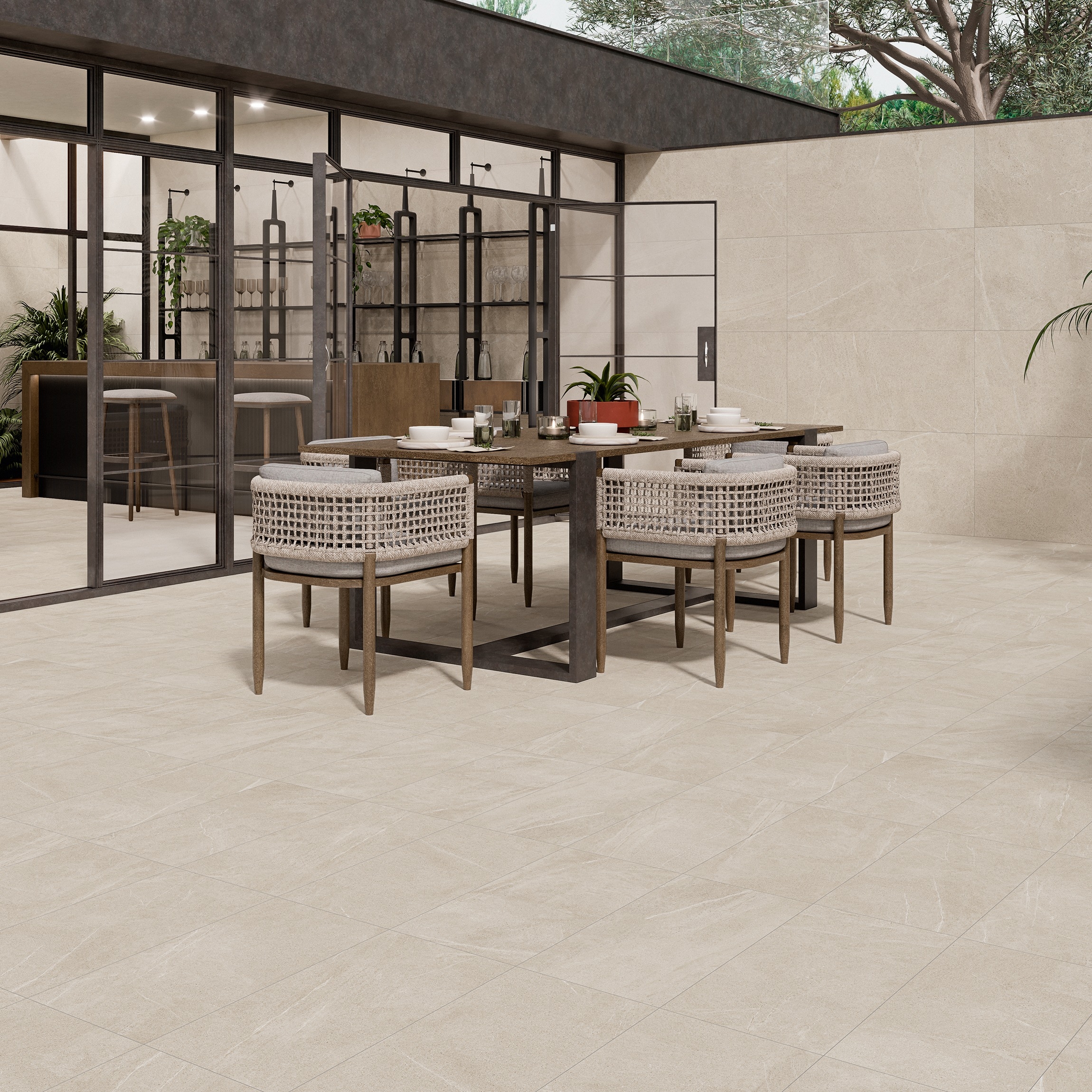
Slip resistance rating affects outdoor tiles design by determining surface traction requirements, finish selection, tile format, layout strategy, and safety zoning needed to maintain secure movement under rain, moisture, and environmental exposure. Exterior environments demand higher traction than interiors. Rating selection directly influences material suitability, surface texture, and long-term safety performance.
Safety Thresholds
Outdoor safety improves when tile surfaces meet higher slip resistance classifications suitable for wet and exposed conditions. R11-rated tiles provide enhanced traction for rain-exposed areas. Higher ratings reduce fall risk on patios, walkways, and terraces. Safety thresholds guide all exterior floor selection.
Finish Selection
Design flexibility narrows as slip resistance requirements increase. Matt, textured, and structured finishes deliver higher friction. Smooth or polished finishes fail under wet conditions. Finish choice prioritises safety over reflectivity outdoors.
Wet-Zone Performance
Slip resistance becomes critical in areas exposed to frequent water contact. Pool surrounds, steps, and sloped surfaces require R11-rated finishes. Enhanced grip protects barefoot movement. Wet-zone zoning prevents accident-prone layouts.
Tile Size Interaction
Traction performance improves when tile size supports slip resistance behaviour. Smaller formats increase grout frequency and surface grip. Large formats require stronger surface texture to maintain safety. Size selection supports rating effectiveness.
Layout Influence
Movement safety improves when layout geometry complements traction behaviour. Joint direction aligned with walking paths improves grip feedback. Drainage-aligned layouts reduce standing water. Layout design reinforces slip resistance performance.
Surface Wear Stability
Long-term safety improves when slip resistance remains stable under wear. Textured finishes resist polishing over time. Durable surface profiles retain friction. Stable ratings protect usability across years of exposure.
Climate Impact
Slip resistance selection must consider climate conditions. Outdoor areas exposed to rain, cleaning, or pool splash require higher traction. Hot climates demand finishes that retain grip when surfaces heat up.
Maintenance Interaction
Slip safety depends on finishes retaining texture after cleaning and environmental exposure. Weather-resistant textures maintain grip. Smooth surfaces degrade faster. Maintenance compatibility influences rating longevity.
Visual Trade-Offs
Aesthetic outcomes adjust when safety requirements limit surface smoothness. Reduced gloss replaces shine. Subtle textures replace flat planes. Safety-led design reshapes exterior appearance.
How Does Outdoor Tiles Design Support Safety In Wet Conditions?
Outdoor tiles design supports safety in wet conditions by combining high slip resistance ratings, textured surface finishes, drainage-aware layouts, moisture-resistant materials, and movement-focused zoning to reduce fall risk on rain-exposed exterior surfaces. Wet safety depends on traction consistency, rapid water shedding, and predictable foot response.
Slip Resistance
Wet-condition safety improves when outdoor tiles meet higher slip resistance thresholds suitable for rain and surface moisture. R11-rated tiles provide enhanced traction. Higher friction reduces loss of footing. Slip rating selection forms the foundation of outdoor safety design.
Surface Texture
Grip performance increases when surface finishes break water films effectively. Textured and structured finishes disperse surface moisture. Reduced hydroplaning improves foot stability. Texture selection remains essential for wet exteriors.
Material Behaviour
Safety consistency improves when tile materials resist surface polishing and moisture absorption. Dense porcelain tiles absorb below 0.5% water. Stable surfaces maintain traction when wet. Material accuracy protects long-term grip performance.
Drainage Layout
Slip risk decreases when layouts support rapid water runoff away from walking paths. Correct slopes prevent pooling. Drainage-aligned joints guide water movement. Dryer surfaces improve traction reliability.
Tile Size Choice
Wet safety improves when tile size supports traction rather than smooth continuous planes. Smaller formats increase grout frequency. Additional joints add micro-traction. Size selection reinforces slip resistance performance.
Joint Design
Underfoot control improves when grout joints contribute surface friction. Narrow but frequent joints increase grip feedback. Weather-resistant grout maintains integrity under moisture exposure. Joint design supports overall safety.
Area Zoning
Accident prevention improves when exterior zones receive slip ratings matched to exposure level. Pool surrounds require higher traction. Steps and ramps demand textured finishes. Zoning prevents uniform but unsafe specifications.
Edge And Step Control
Fall risk reduces when step edges and level changes remain clearly defined and slip-safe. Textured nosings improve foot placement. Contrasting edge detailing enhances visibility. Edge control supports safe transitions.
Heat Interaction
Wet safety remains reliable when finishes retain grip under high surface temperatures. Textured finishes maintain traction when hot. Smooth finishes lose grip faster. Heat-stable textures protect safety in hot climates.
Maintenance Stability
Long-term wet safety improves when surfaces retain texture after cleaning and environmental exposure. Wear-resistant finishes preserve friction. Consistent performance reduces safety degradation over time.
How Does Outdoor Tiles Design Support Low Maintenance?
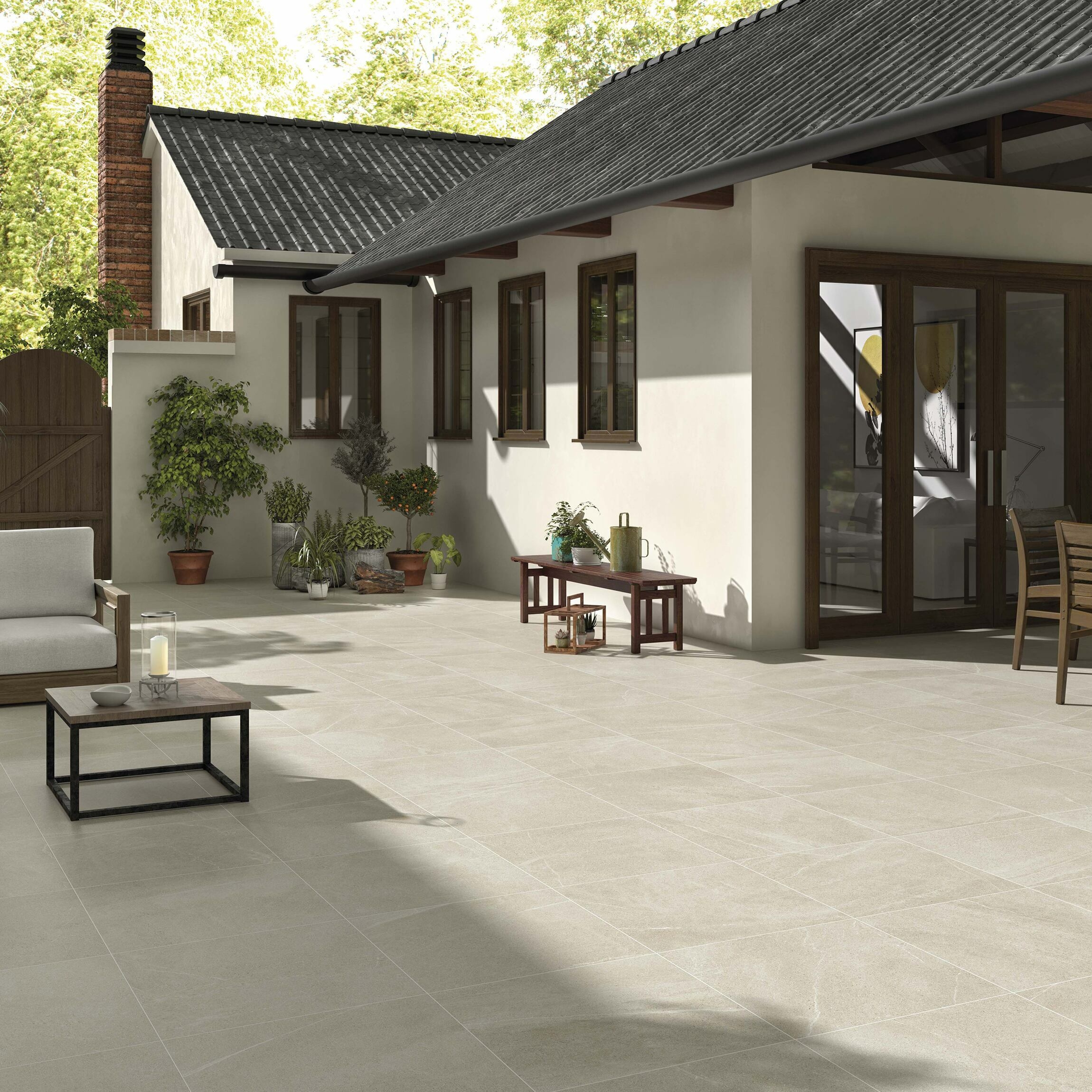
Outdoor tiles design supports low maintenance by using low-porosity materials, UV-stable colours, textured slip-safe finishes, drainage-aware layouts, and weather-resistant joints that resist staining, fading, algae growth, and surface wear in exposed environments. Performance-led specification reduces cleaning frequency and prevents premature surface degradation.
Low Porosity
Maintenance effort decreases when outdoor tiles block water and dirt absorption at the material level. Porcelain tiles absorb below 0.5% water. Surface contaminants remain superficial. Simple wash-down removes residue without deep cleaning.
UV Stability
Visual upkeep reduces when colour systems resist ultraviolet fading and chalking. UV-stable pigments maintain colour consistency. Reduced fading avoids resurfacing or replacement. Stable appearance lowers long-term intervention.
Textured Finishes
Cleaning efficiency improves when finishes resist water film formation and algae adhesion. Textured and matt surfaces disperse moisture. Reduced pooling limits biological growth. Safer surfaces remain cleaner between washes.
Drainage Design
Maintenance demand decreases when layouts evacuate water quickly from walking zones. Correct slopes prevent standing water. Faster drying reduces staining and algae formation. Drainage-aware layouts preserve surface condition.
Joint Durability
Upkeep reduces when joints tolerate moisture, heat, and movement without cracking or washout. Outdoor-grade grout resists erosion. Correct joint width absorbs expansion. Durable joints prevent recurring repairs.
Tile Size Balance
Cleaning time reduces when tile sizes limit excessive joints without compromising drainage. Medium to large formats cut joint length by approximately 30–35%. Balanced sizing avoids dirt traps. Efficient sizing simplifies routine care.
Heat Management
Surface stability improves when colours and finishes manage heat gain effectively. Light to mid-tone colours reduce surface temperature. Lower heat limits residue baking. Cooler surfaces clean more easily.
Chemical Tolerance
Routine maintenance remains simple when finishes tolerate outdoor cleaners and pressure washing. Dense porcelain resists chemical attack. No surface breakdown occurs. Predictable cleaning preserves appearance.
Zoning Accuracy
Maintenance efficiency improves when specifications match exposure intensity by area. Pool surrounds use higher traction finishes. Pathways use durable textures. Correct zoning prevents localized deterioration.
Installation Quality
Long-term upkeep decreases when installation accuracy prevents water ingress and edge damage. Proper bedding supports stability. Finished edges resist chipping. Quality installation reduces corrective maintenance.
What Outdoor Tiles Design Factors Improve Long-Term Durability?
Outdoor tiles design improves long-term durability when material density, tile thickness, surface finish, slip resistance, joint specification, drainage planning, and climate suitability operate together to resist heat, moisture, load, and environmental wear in exterior spaces. Durability depends on system coordination rather than isolated product choice.
Material Density
Long-term exterior durability increases when tile bodies maintain high density and very low water absorption. Porcelain tiles absorb below 0.5% water. Dense structures resist cracking, staining, and moisture ingress. Material density defines exterior lifespan.
Tile Thickness
Structural resistance improves when outdoor tiles use thickness levels appropriate for load and exposure. Thickness between 9–10 mm supports bonded installations. Thickness of 18–20 mm supports paver and raised systems. Correct thickness prevents breakage and flexing.
Surface Finish Stability
Wear resistance improves when surface finishes retain texture and structure under sun, rain, and cleaning. Matt and textured finishes resist polishing. Stable textures preserve traction and appearance. Finish durability protects long-term safety.
Slip Resistance Retention
Exterior safety durability improves when slip resistance remains stable over time. R11-rated surfaces maintain traction under wet conditions. Textured profiles resist surface smoothing. Stable slip performance prevents replacement driven by safety failure.
UV And Heat Resistance
Visual and structural durability improve when tiles resist ultraviolet radiation and heat stress. UV-stable pigments prevent fading. Dense bodies tolerate high surface temperatures. Heat resistance limits micro-cracking in hot climates.
Joint And Grout Specification
System longevity increases when joints accommodate thermal movement and moisture exposure. Outdoor-grade grout resists erosion and cracking. Correct joint width absorbs expansion. Durable joints protect tile edges.
Drainage Accuracy
Moisture-related failure reduces when layouts support rapid water evacuation. Correct slope geometry prevents pooling. Dry surfaces limit algae growth and freeze–thaw stress. Drainage protects structural layers.
Layout Discipline
Edge and surface durability improve when layouts minimise excessive cuts and weak points. Straight and aligned patterns distribute stress evenly. Reduced edge exposure limits chipping. Disciplined layouts extend service life.
Installation Compatibility
Durability improves when tile design aligns with substrate preparation and installation method. Proper bedding supports load transfer. Raised systems isolate moisture. Installation accuracy prevents premature failure.
Climate Zoning
Exterior performance improves when tile specification matches exposure intensity by area. Pool surrounds require higher traction. Open terraces require UV resistance. Correct zoning prevents over-stressing surfaces.
What Common Mistakes Reduce Outdoor Tiles Design Performance?
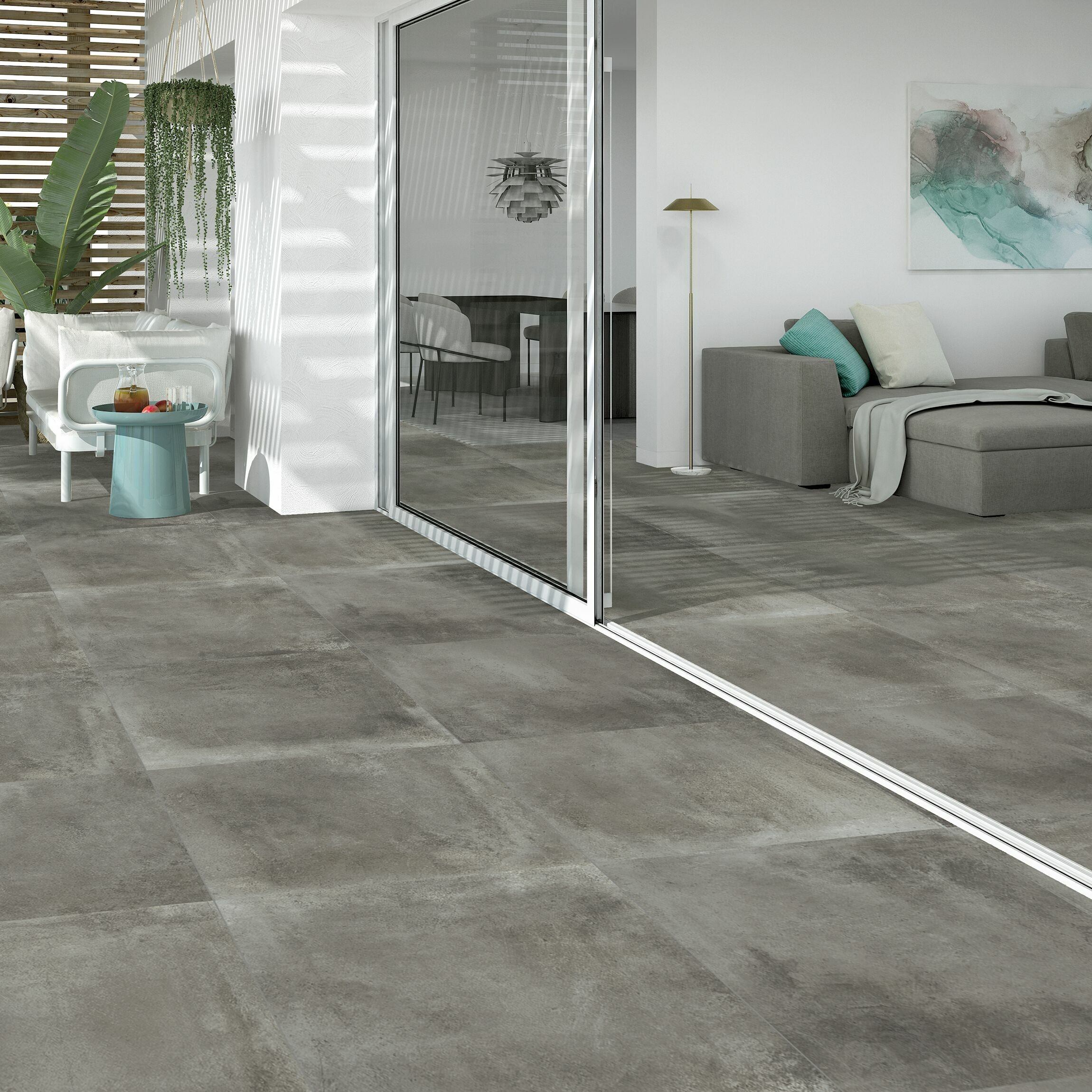
Outdoor tiles design performance reduces when material selection, thickness, surface finish, layout geometry, joint specification, and drainage planning fail to align with weather exposure, heat load, moisture presence, and usage intensity in exterior environments. Performance errors accelerate wear, increase slip risk, and shorten service life in exposed residential spaces.
Wrong Material
Durability declines when tiles with high water absorption or low density are used outdoors. Ceramic tiles absorb moisture above exterior-safe thresholds. Freeze–thaw and heat stress cause cracking. Incorrect material choice accelerates failure.
Insufficient Thickness
Structural reliability drops when tile thickness does not match load and installation method. Thin tiles flex under furniture and foot traffic. Edge chipping increases. Incorrect thickness leads to breakage and debonding.
Polished Finishes
Safety performance collapses when smooth polished finishes are installed on exterior floors. Wet traction falls sharply under rain or cleaning. Slip incidents increase. Polished surfaces remain unsuitable for outdoor walking zones.
Low Slip Ratings
Accident risk rises when slip resistance ratings remain below exterior requirements. R9 or unrated tiles lose grip when wet. Exposed areas require R11-rated traction. Inadequate ratings compromise safety.
Poor Drainage
Moisture damage increases when layouts ignore slope and runoff control. Standing water promotes algae growth. Pooling accelerates staining and joint erosion. Drainage neglect undermines durability.
Incompatible Grout
Joint failure occurs when interior-grade grout is used outdoors. Washout and cracking appear under rain and heat. Rigid joints fail to absorb expansion. Incorrect grout selection shortens lifespan.
Excessive Cuts
Edge damage increases when layouts create too many small cuts and weak corners. Stress concentrates at cut edges. Chipping becomes frequent. Poor layout planning weakens surface integrity.
Dark Heat-Absorbing Colours
Thermal stress increases when dark colours dominate exposed surfaces. Heat absorption raises surface temperature. Expansion stress intensifies. Dark palettes reduce comfort and durability in hot climates.
Ignoring UV Stability
Visual degradation accelerates when tiles lack UV-stable pigments. Colour fading and chalking appear. Surface appearance deteriorates quickly. UV instability reduces aesthetic lifespan.
Uniform Specification
Performance mismatch occurs when all exterior areas use the same tile specification. Pool surrounds need higher traction than patios. Steps require enhanced edge grip. Lack of zoning creates unsafe conditions.
Poor Substrate Prep
System failure increases when base preparation does not support drainage and load. Trapped moisture damages adhesives. Uneven bases cause cracking. Installation accuracy remains critical.
Maintenance Oversight
Long-term performance declines when finishes and joints require intensive upkeep. Algae buildup becomes frequent. Cleaning effort rises. Low-maintenance systems reduce deterioration.
How Does Outdoor Tiles Design Align With Modern And Luxury Exteriors?
Outdoor tiles design aligns with modern and luxury exteriors by combining clean surface geometry, material authenticity, controlled colour palettes, precision detailing, and high-performance durability suited to exposed environments. Modern and luxury exterior design values restraint, proportion, and long-term performance. Outdoor tiles function as architectural surfaces rather than decorative finishes.
Surface Simplicity
Visual refinement increases when outdoor tile surfaces remain uncluttered and continuous. Large-format tiles reduce grout density by approximately 30–35%. Straight and linear layouts maintain order. Minimal segmentation supports modern exterior aesthetics.
Material Authenticity
Luxury perception strengthens when outdoor tiles replicate natural materials with high visual accuracy and engineered performance. Stone-effect porcelain mirrors slate, limestone, and travertine textures. Concrete-effect tiles deliver refined, contemporary character. Authentic appearance without maintenance risk defines premium exteriors.
Colour Discipline
Timeless exterior appeal improves when colour systems remain neutral and balanced. Light to mid-tone greys, sands, and stone colours manage heat and visual calm. Controlled palettes avoid trend dependency. Colour restraint supports long-term luxury value.
Texture Control
Surface sophistication improves when texture provides grip without visual aggression. Fine-grain textured finishes enhance safety while maintaining elegance. Overly rough textures disrupt refined appearance. Balanced texture defines luxury outdoor environments.
Dimensional Precision
Architectural quality improves when tile sizes align precisely with outdoor proportions and boundaries. Consistent dimensions reduce excessive cuts. Clean edges reinforce craftsmanship. Dimensional discipline communicates high-end execution.
Seamless Transitions
Luxury alignment strengthens when indoor and outdoor tiles coordinate visually. Matching tones and formats extend living spaces outward. Seamless transitions enhance spatial flow. Unified surfaces support contemporary design language.
Detailing Accuracy
Premium quality becomes evident when joints, edges, and trims remain precise and minimal. Narrow, consistent joints reduce visual noise. Clean edge detailing prevents chipping. Accurate detailing defines luxury outcomes.
Performance Integrity
Authentic luxury sustains when outdoor tiles maintain appearance and safety over time. Dense, low-porosity materials resist staining and wear. UV-stable finishes prevent fading. Performance longevity underpins high-end exterior design.
Climate Responsiveness
Exterior refinement improves when tiles perform reliably under sun, heat, and moisture exposure. Heat-managing colours improve comfort. Slip-safe finishes protect usability. Climate-appropriate specification supports luxury living in exposed environments.
How Does Outdoor Tiles Design Contribute To Sustainable Exterior Construction?
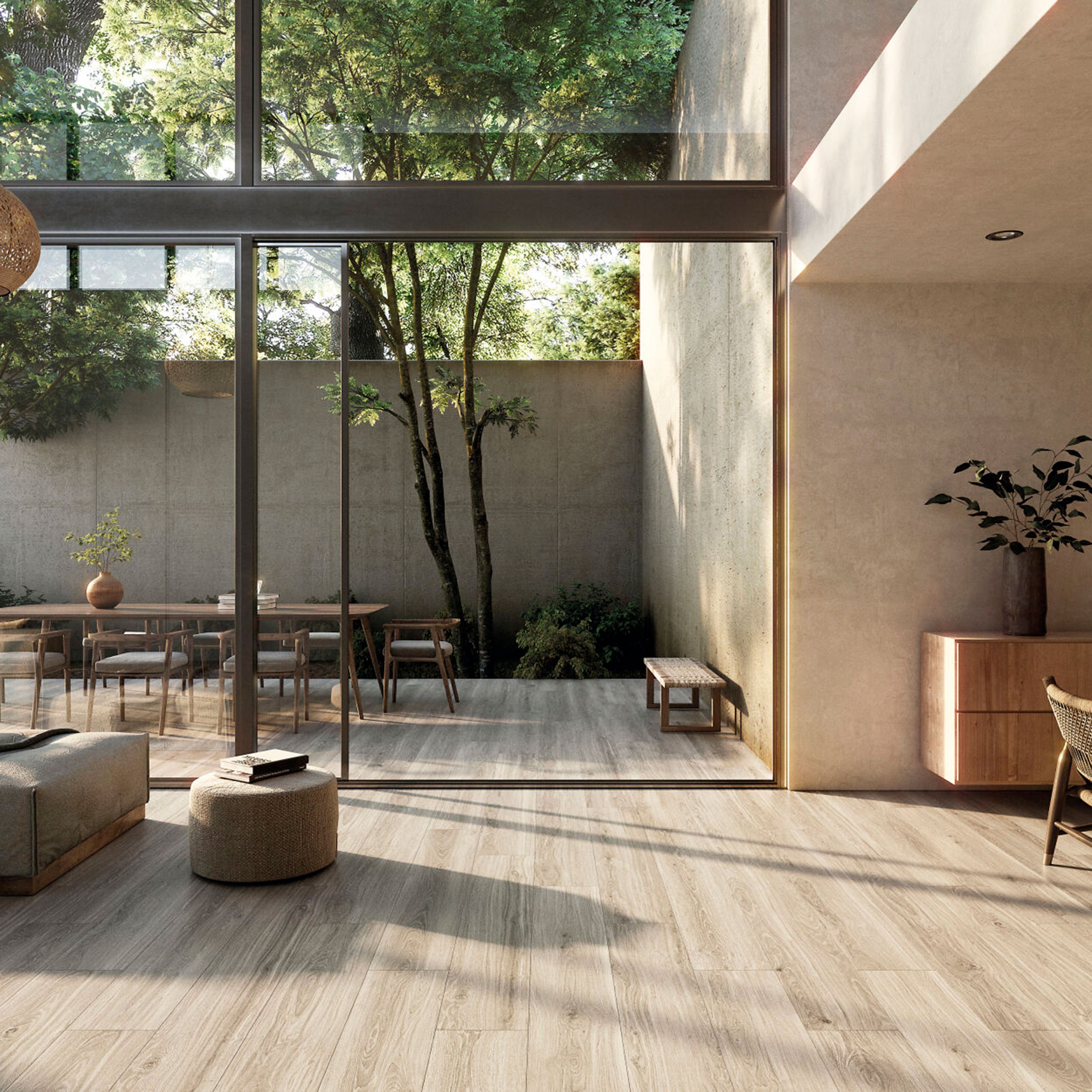
Outdoor tiles design contributes to sustainable exterior construction by extending surface lifespan, reducing material waste, lowering maintenance resource use, improving thermal comfort, and protecting structural substrates through durable, low-porosity, and climate-appropriate tile systems. Sustainability in exterior spaces depends on lifecycle efficiency rather than short-term appearance. Correct outdoor tiles design reduces replacement cycles, minimises environmental load, and supports long-term residential performance in exposed conditions.
Material Longevity
Environmental impact reduces when outdoor tiles deliver long service life under sun, rain, and foot traffic. Dense porcelain tiles exceed 20–30 years of functional lifespan. Water absorption below 0.5% prevents internal degradation. Long lifespan lowers raw material extraction and manufacturing demand.
Waste Reduction
Construction waste decreases when tile size and layout planning minimise cutting and offcuts. Medium and large outdoor tile formats reduce cut frequency by approximately 10–15%. Optimised layouts improve installation efficiency. Reduced waste supports resource-efficient exterior construction.
Low Maintenance Resource Use
Water and chemical consumption decreases when outdoor tiles resist staining, algae growth, and surface erosion. Non-porous tiles require less frequent cleaning. Textured finishes reduce biological buildup. Lower maintenance intensity reduces long-term resource use.
Thermal Comfort Support
Energy efficiency improves when outdoor tiles manage heat absorption effectively. Light and mid-tone colours reduce surface temperature. Dense materials moderate heat gain and release. Improved thermal behaviour supports outdoor comfort in hot climates.
Substrate Protection
Structural sustainability improves when tile systems protect underlying concrete and waterproof layers. Low-absorption tiles prevent moisture ingress. Correct joint specification limits seepage. Protected substrates reduce repair and reconstruction waste.
Renovation Cycle Reduction
Environmental pressure decreases when outdoor tiles design avoids premature replacement. UV-stable colours resist fading. Durable finishes retain traction and appearance. Fewer refurbishments reduce disposal volume and embodied energy loss.
Recyclable Material Composition
Circular construction potential increases when outdoor tiles use mineral-based compositions. Porcelain tiles consist of natural raw materials. Broken tiles re-enter aggregate reuse streams. Material compatibility supports circular economy principles.
Installation Efficiency
Energy and material use reduce when outdoor tile systems install accurately and predictably. Consistent tile thickness improves bedding efficiency. Fewer installation errors reduce rework. Efficient installation supports sustainable build practices.
Climate Zoning Accuracy
Sustainability outcomes improve when tile performance matches exposure level by exterior zone. Pool surrounds require higher slip resistance. Open terraces require UV stability. Correct zoning prevents over-specification and material waste.
Summing Up
Effective outdoor tiles design succeeds when durability, safety, and climate performance guide every specification decision rather than appearance alone. Exterior spaces demand dense, low-porosity materials, appropriate tile thickness, slip-safe finishes, and drainage-aware layouts to withstand sun, heat, rain, and daily use. Thoughtful colour selection improves thermal comfort, while correct sizing and joint design protect surfaces from cracking and moisture damage.
Clear zoning between patios, pathways, pool surrounds, and terraces ensures each area performs as intended. When material, size, finish, colour, layout, joints, drainage, and slip resistance operate as one integrated system, outdoor tiles design delivers long-lasting, low-maintenance, safe, and visually refined exterior spaces that remain reliable and comfortable over time.
